
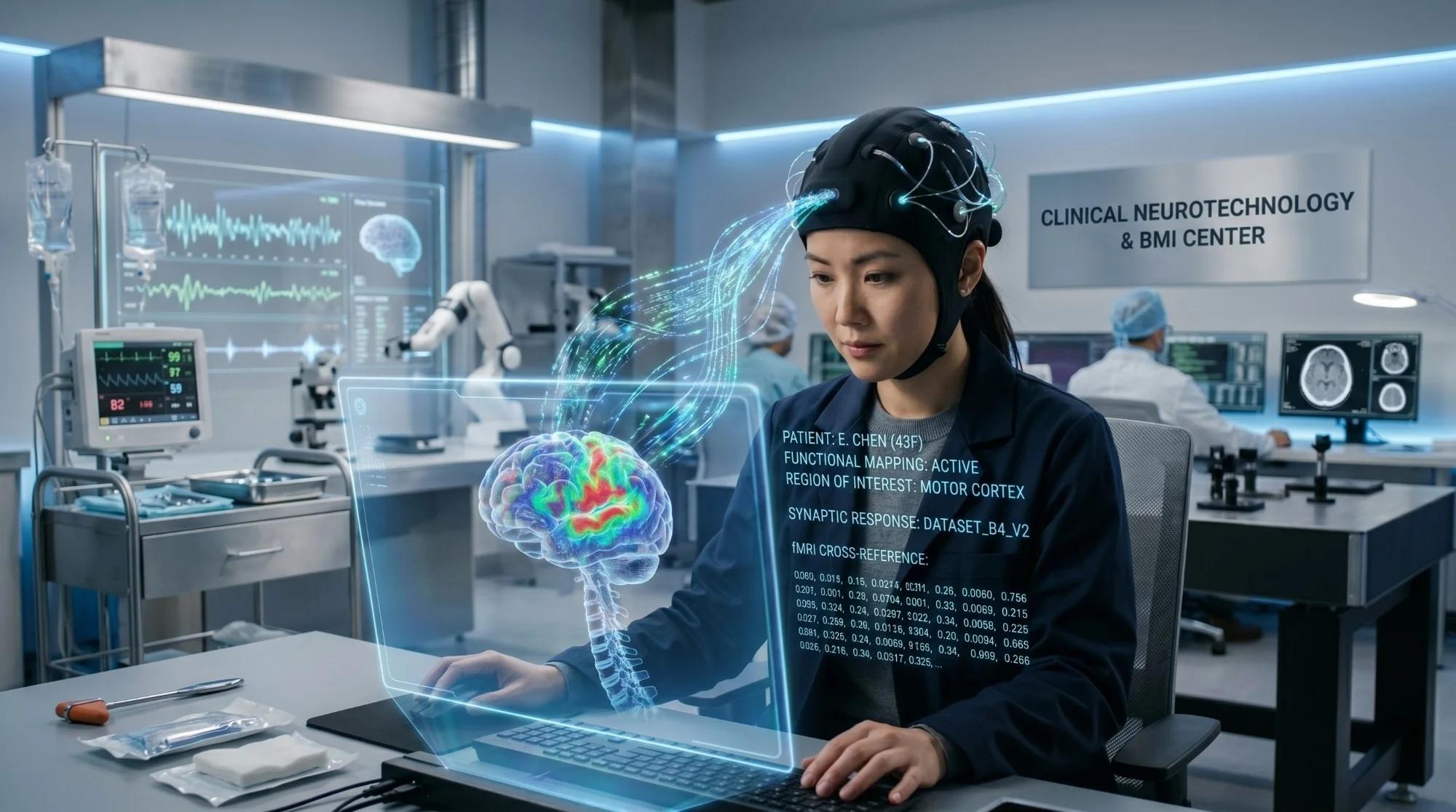
Brain-computer interfaces are opening new possibilities for how people interact with machines. By translating neural signals into digital commands, BCI systems can enable hands-free control of devices, virtual environments, and assistive technologies.
At CMKL University’s Digital Biomedicine & Intelligence Lab, M.S. in AiCE student Kantham Thangthong developed a brain-computer interface project that allows users to fly a virtual drone with their mind.
The system decodes brain signals in real time and converts them into drone movement commands without requiring physical input. This creates a direct interaction loop between neural intention and digital action, demonstrating how AI and signal processing can support more intuitive human-machine interfaces.
While the project is demonstrated through virtual drone control, its potential applications extend across several domains. BCI-driven systems could support neurorehabilitation, assistive technology for users with limited mobility, hands-free smart device control, robotic operation, and immersive VR/AR training environments.
The project also highlights the interdisciplinary nature of CMKL’s graduate research. It combines biomedical signal processing, AI, interaction design, and real-time system development to explore how neural data can be transformed into useful, responsive digital experiences.
For CMKL, this project represents a clear example of AI engineering applied to human-centered innovation: building systems that can expand accessibility, support rehabilitation, and create new ways for people to interact with technology.