
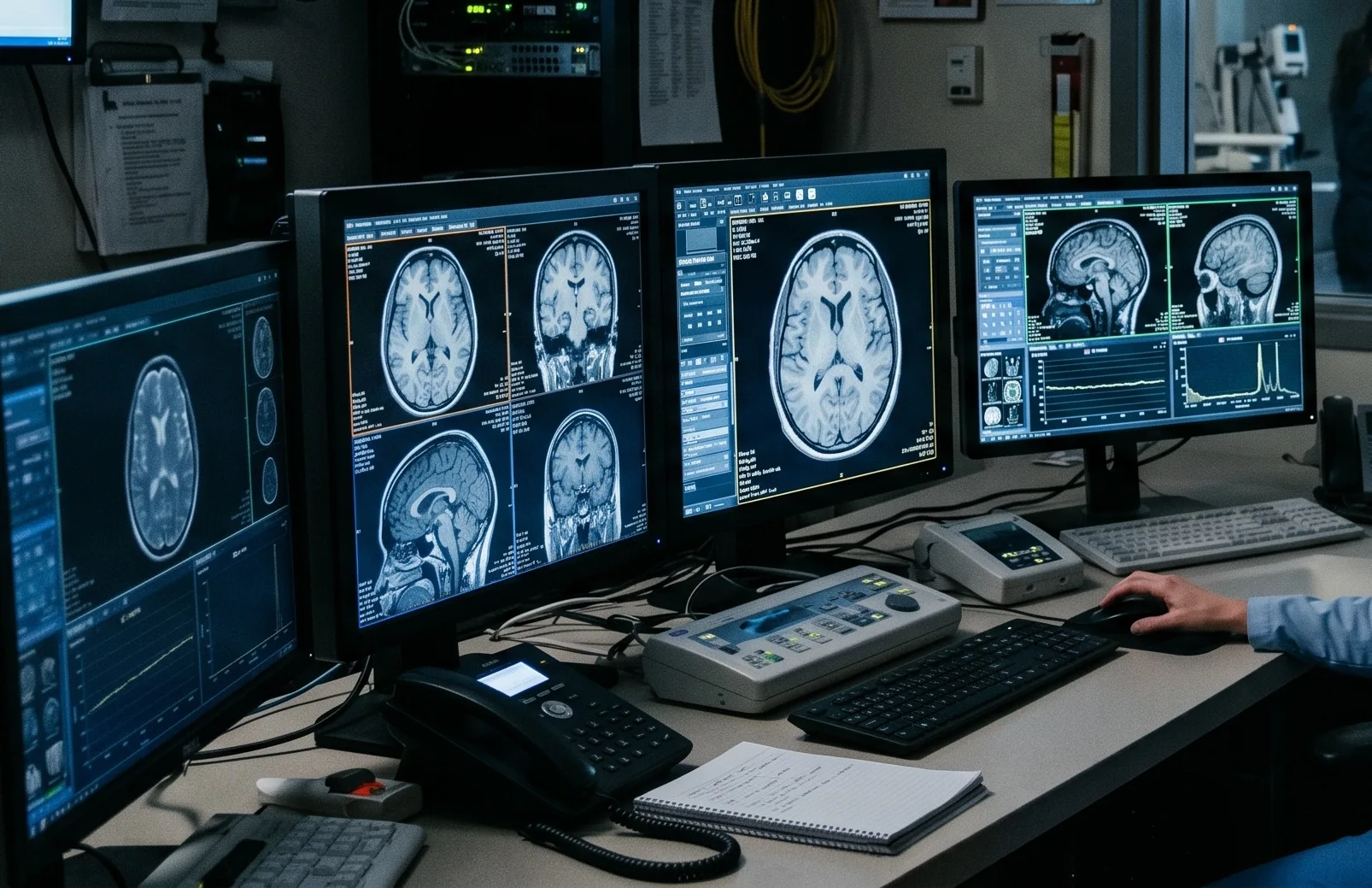
Radiotherapy planning typically relies on two medical imaging modalities: magnetic resonance imaging (MRI), which offers strong tumor visualization, and computed tomography (CT), which is used for dose calculation. While both scans are valuable, acquiring and aligning MRI and CT images can introduce registration errors, extend clinical workflow, and expose patients to additional imaging steps.
At CMKL University, Ph.D. in AiCE student Pharuj Rajborirug is exploring how artificial intelligence can support a more efficient MR-only radiotherapy workflow.
His project, MRI-to-sCT with Conditional Rectified Flow, develops sCTFlow, a generative AI model designed to synthesize high-fidelity CT images directly from MRI scans. By producing synthetic CT images that remain anatomically consistent and clinically useful, the system aims to support more streamlined treatment planning without requiring separate CT acquisition in every case.
The model uses a conditional rectified flow approach to generate synthetic CT images from MRI input. It is designed to improve speed and memory efficiency, making it more practical for medical imaging workflows where 3D data can be large and computationally demanding. Through this work, the project demonstrates how advanced generative models can contribute to medical AI applications that address real clinical constraints.
For CMKL, this project reflects the university’s emphasis on applied AI research that connects engineering, medicine, and real-world deployment. Rather than treating AI as a standalone technical exercise, the project shows how graduate research can target concrete challenges in healthcare, from workflow efficiency to image alignment and treatment planning support.

