For many first-time investors, the hardest part of investing is not only choosing a product. It is understanding how personal goals, risk appetite, time horizon, and interests should translate into an actual portfolio.
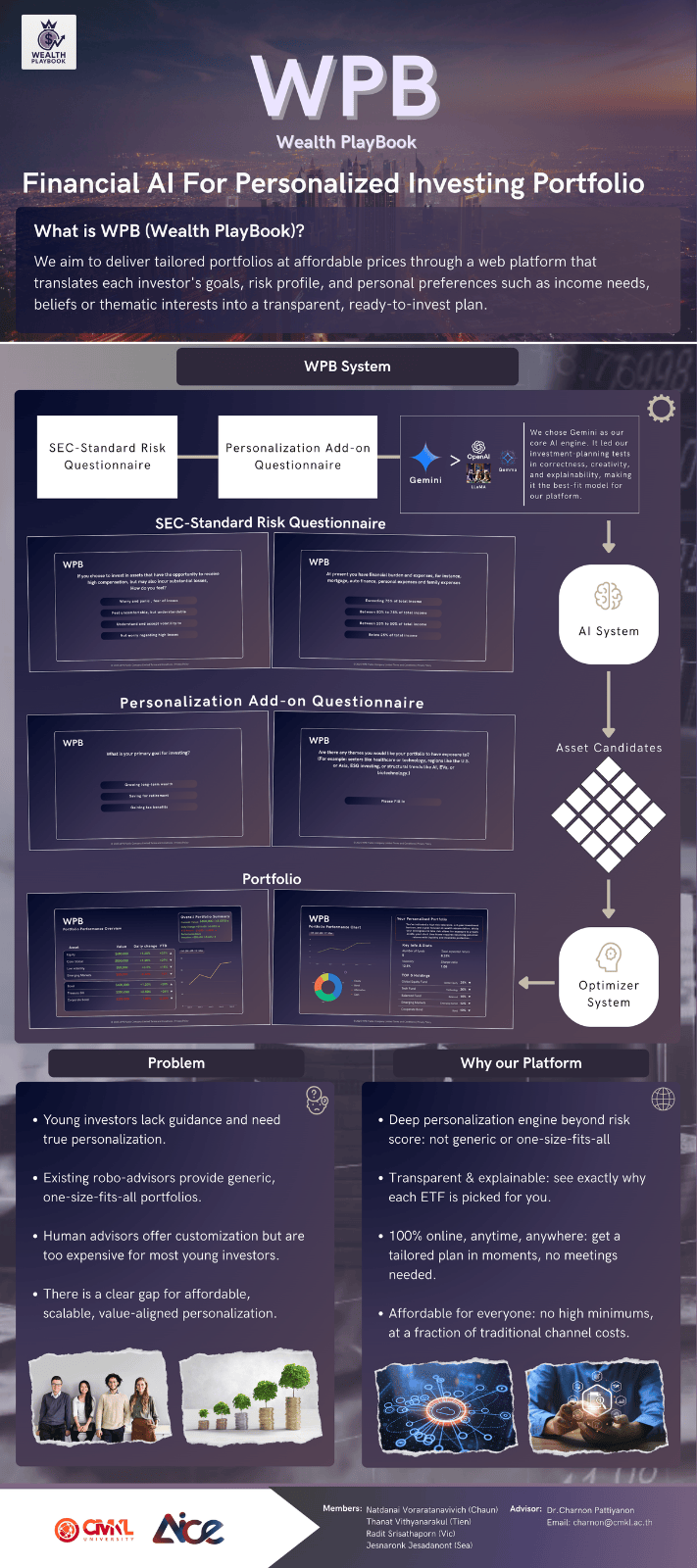
Wealth PlayBook, developed by CMKL students Natdanai Voraratanavivich, Thanat Vithyanarakul, and Radit Srisathaporn under the guidance of Dr. Charnon Pattiyanon, was created to make this process more accessible. The project explores how artificial intelligence can help beginner investors move from vague financial intentions to clearer, explainable ETF-based portfolio suggestions.
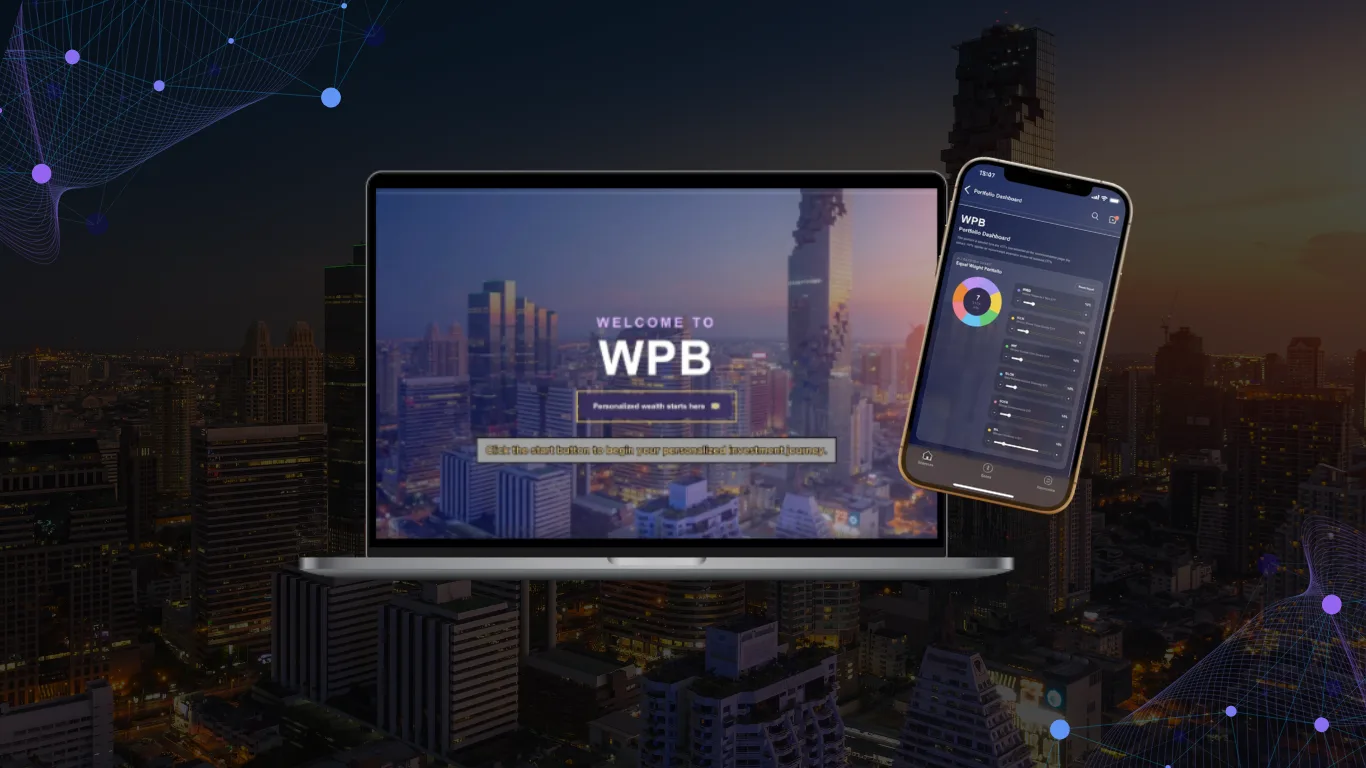
The team built a web-based investment planning platform that allows users to enter their financial goals, risk preferences, investment timeline, and thematic interests. Instead of simply displaying a list of investment products, the platform interprets these inputs and maps them to ETF characteristics. The result is a personalized portfolio recommendation supported by explanations that help users understand why certain assets may align with their goals.
At the technical level, Wealth PlayBook combines large language model reasoning, sentence embeddings, asset tagging, and recommendation logic. A FastAPI backend supports the recommendation engine, while a Next.js frontend provides the user-facing experience. The system is designed to make the recommendation process more transparent by connecting each portfolio suggestion to user preferences and investment themes.
This project is especially relevant in a world where more people are gaining access to financial products but may not yet have the knowledge to evaluate them confidently. Wealth PlayBook does not aim to replace professional financial advice. Instead, it serves as an educational and decision-support tool that helps users better understand how portfolio construction can be connected to personal goals.
For CMKL students, the project demonstrates applied AI in financial technology, explainable recommendation design, and user-centered product thinking. It also reflects an important principle in AI development: a useful system should not only produce an answer, but also help users understand the reasoning behind that answer.